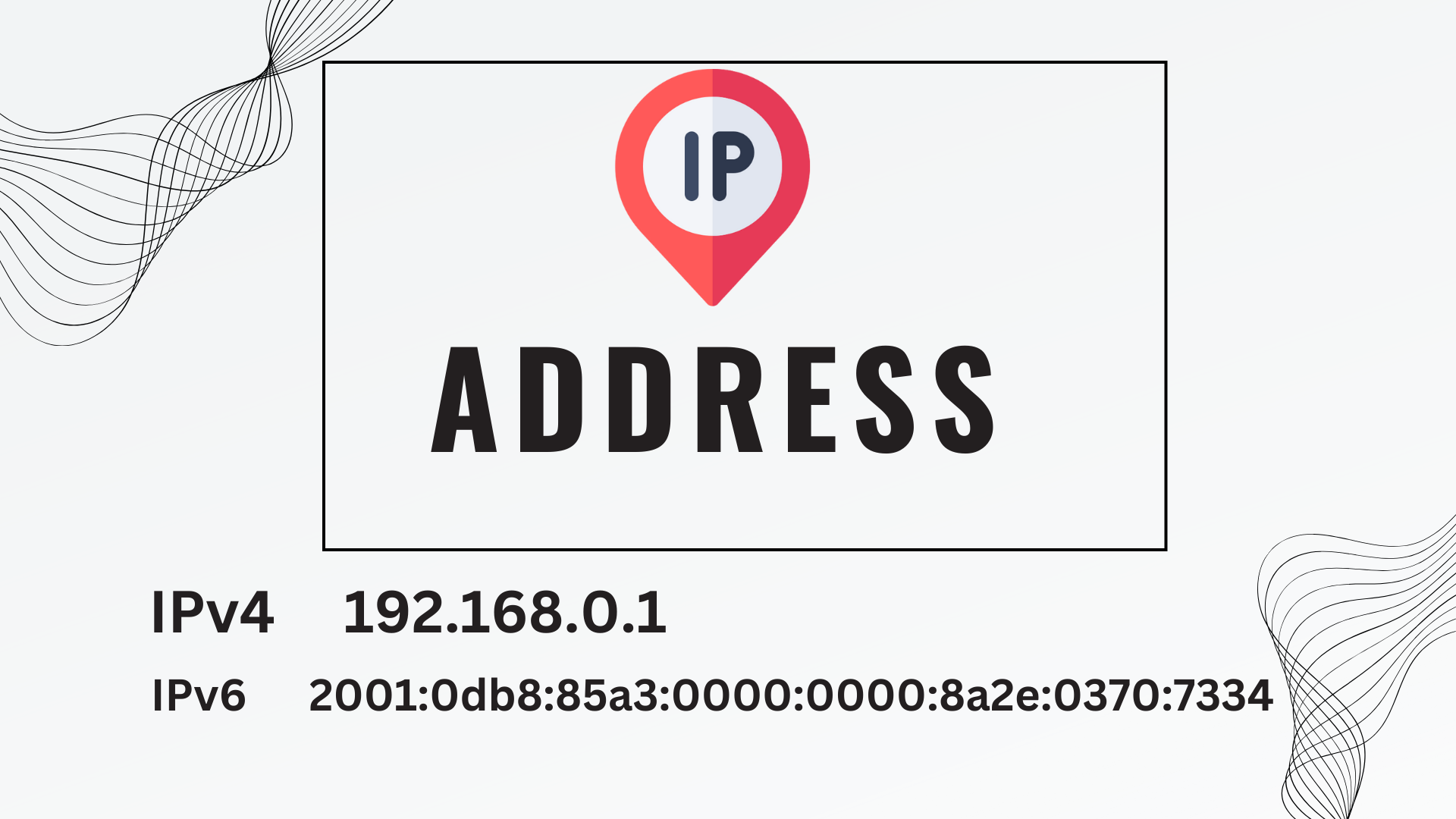
An IP address, or Internet Protocol address, is a numerical label assigned to each device connected to a computer network that uses the Internet Protocol for communication. It serves two main purposes: host or network interface identification and location addressing. IP addresses are essential for routing data packets between devices on a network.
There are two main types of IP addresses: IPv4 (Internet Protocol version 4) and IPv6 (Internet Protocol version 6).
1.
IPv4 Address:
- This is the most widely used version of IP addresses.
- It consists of 32 bits, usually represented as four sets of numbers separated by dots (e.g., 192.168.0.1).
- IPv4 supports approximately 4.3 billion unique addresses, but due to the growing number of devices connected to the Internet, the available IPv4 addresses are running out.
2.
IPv6 Address:
- IPv6 was introduced to address the limitations of IPv4, primarily the exhaustion of available addresses.
- It uses a 128-bit address scheme, allowing for an astronomically larger number of unique addresses (2^128).
- IPv6 addresses are represented as eight groups of four hexadecimal digits, separated by colons (e.g., 2001:0db8:85a3:0000:0000:8a2e:0370:7334).
IP addresses can be further classified into two categories based on their use:
1.
Public IP Address:
- Public IP addresses are globally unique and routable on the Internet.
- They are assigned by Internet Service Providers (ISPs) and are used to identify a device on the public Internet.
- Public IP addresses are needed for devices that directly communicate over the Internet, such as web servers.
2.
Private IP Address:
- Private IP addresses are used within a private network and are not directly accessible from the Internet.
- They are typically assigned to devices within a local area network (LAN) to enable communication within that network.
- Common private IP address ranges include 192.168.x.x, 172.16.x.x to 172.31.x.x, and 10.x.x.x.
IP addresses play a crucial role in the functioning of the Internet by enabling the routing of data between devices. They are fundamental for communication and the identification of devices on a network.